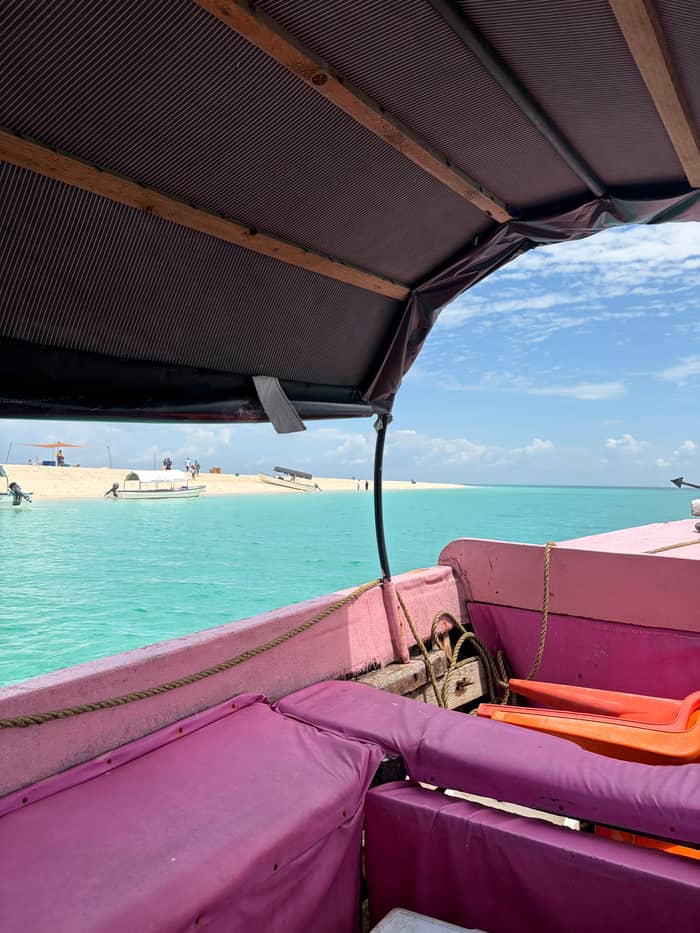
Prison
The planned prison
A jail that missed its purpose
See the toursGuides
Language
Currency
See open datesstarting at $17 · free cancellationCost for your party
Choose from 3 options
Select a group size and compare three guided ways to reach the museum.
≈
View≈
View≈
ViewGetYourGuide's starting prices, converted at the ECB reference rate; exact pricing appears when you book.
The nickname promises dungeons, yet the official account says the prison never did the job it was built for. A careful reading of what the sources state, where they disagree and what you can see today.
Editorial team, nakupendasandbank.quest · Updated November 23, 2026 · 8 min of reading
Facts at a glance
Why is it called Prison Island in Zanzibar? Because a prison was built on it. The Zanzibar Commission for Tourism dates the prison on Changuu Island to the 1860s and adds that the building later served as a yellow fever quarantine station.1 That is the whole origin of the nickname, and it is a plain one: the building gave the island its popular name, and the name stuck long after the building changed jobs.
The twist is that the prison did not do the work its name suggests. The Commission says the building was meant to house rebellious slaves but was never used for that purpose.2 Anyone arriving with the picture of a notorious jail full of chained captives should adjust it. What stands on the island is better understood as a planned prison that took on other jobs, including a role in public health.
This page follows the official lines as far as they go and says plainly where they stop. Zanzibar's history is dense, and popular accounts often add names and dates that official tourism pages do not give. We have used the Commission and UNESCO for the facts below, and we leave out anything that would need a source we could not read.
What the sources give
| Life of the building | What the sources say | What you can see |
|---|---|---|
| Planned prison | Built as a prison in the 1860s1 | The old building |
| Detention | Held disobedient officials of the sultanate3 | Cells and rooms, per your guide |
| Quarantine | Used for yellow fever after World War I7 | Museum labels and artifacts5 |
| Museum | A small museum with artifacts5 | A short indoor stop |
| Sanctuary | Giant tortoises over a century old6 | The sanctuary walk |
Statements are the Commission's; its page also mentions a British purchase in the 1890s, so treat any single year with care.4
The Commission's account of Changuu has several threads. First, the building was meant for slaves who rebelled. Second, it never held them: the Commission says the sultanate used it to confine officials who had disobeyed.3 Third, the prison was abandoned after World War I and only later turned to yellow fever quarantine.7 Each thread changes how you read the walls on a visit.
Notice what the Commission leaves out. It gives no number of prisoners, no names of those detained and no single year for the end of the prison. It gives decades and events, such as the end of a war, rather than exact years. A guide who offers precise figures is drawing on other sources, and the polite way to treat them is to ask where they come from. The museum staff can often point you to the labels that support a number.
For anyone reading up on Prison Island Zanzibar history, the useful lesson is that the building has had three lives: a prison that never worked as one, a quarantine station and a small museum. A good visit walks through those layers in order, and the timeline below sets them out as the Commission tells them, with the second date from the same page shown beside it.
The island in order
1860s
The Commission says Changuu was built as a prison.1
In use
The prison was never used as planned and held officials instead.3
1890s
The Commission also mentions a British purchase in this decade.4
After the war
The building served for yellow fever after World War I.7
Now
Careful readers will notice that the Commission's page does not give a single date. It places the prison's construction in the 1860s,1 and elsewhere on the same page it has the British buying the island in the 1890s and using it to hold rebellious slaves.4 These statements do not sit together easily: one has the prison built in the earlier decade, the other has the island changing hands in the later one.
A different Commission page, on its Prison Island tour, says the British finished building the prison in 1894 and that it was only ever used as a quarantine centre.10 There is no neat way to settle this from the pages, and this guide does not try. The honest reading is that the Commission mentions both decades and that the page is a summary for visitors, not an archival record. When a source gives two dates, state both, attribute them and move on; that is the approach taken here. If an exact year matters to you, ask the museum staff what their own labels say.
The disagreement also shows how thin the official record is for visitors. The Commission's page is a destination summary, not a scholarly history. It is a starting point for questions, and the questions are worth asking. A guide who says the dates are uncertain is giving you a more accurate picture than one who recites a single year with great confidence.
Where to start
Choose your thread and ask your guide to start there.
If I want the name explained
Start at the old prison
The Commission says it was built as a prison in the 1860s.1
If I want the slave-trade context
Walk Stone Town first
UNESCO lists the site of the last slave market in town.9
If I want the health story
Ask about quarantine
It served for yellow fever after World War I.7
If I want objects to look at
Go into the museum
It shows objects from the prison and quarantine periods.5
If I want animals as well
Add the sanctuary
The sanctuary holds tortoises over a century old.6
Layers of the island
Prison
A jail that missed its purpose
See the tours
Quarantine
A refuge off the port
See the tours
Museum
Artifacts and stories
See the toursTo understand why a prison for rebellious slaves was planned on Changuu, Zanzibar at all, look at the town across the water. UNESCO stresses Zanzibar's symbolic weight in the suppression of slavery: a leading slave-trading port of East Africa, and the base of campaigners such as David Livingstone.11 That is the context in which an island prison for slaves was imagined, and it makes the building's non-use more striking.
Stone Town carries the memory in stone. UNESCO lists the Anglican cathedral among the town's major buildings, built where the last slave market stood and commemorating the campaign against the trade.9 The Old Fort, in the same list, stands on the site of an earlier Portuguese church.12 A walk through the old town before or after the boat gives the island its setting.
UNESCO also presents Stone Town as a model of the Swahili trading towns that grew along the East African coast.13 That trading past is the backdrop for everything on the water: ships, merchants, quarantine rules and a sultan's officials. A boat day to Changuu is a short glimpse of that bigger story, and it rewards readers who have spent even an hour in the old town first.
After the prison idea faded, the Commission says the building became a station where yellow fever cases were kept apart.7 The change of use fits the island's long role as a place apart from the town, a role that the Commission's description of it as a day trip from Stone Town still echoes.8 The Commission's page does not say how many people passed through or for how long, so the details of daily life there are not part of the official record we could read.
What the quarantine period leaves behind is a layer of meaning. Visitors who think of the island as a place of confinement are right, though not in the way the nickname implies. The building held people who might carry illness, and it belongs to the story of how a busy trading port protected itself. The Commission's museum summary promises artifacts from both the prison and the quarantine years,5 which links both eras in a single set of rooms.
Ask your guide how the building was used in this period, and listen for specifics. A guide who can point to rooms, doors and spaces and say what happened in them is drawing on local knowledge that is worth hearing. A guide who speaks only in generalities is telling you what the sources say, which is also fair. Either way, treat dates and numbers as claims to check.
Video
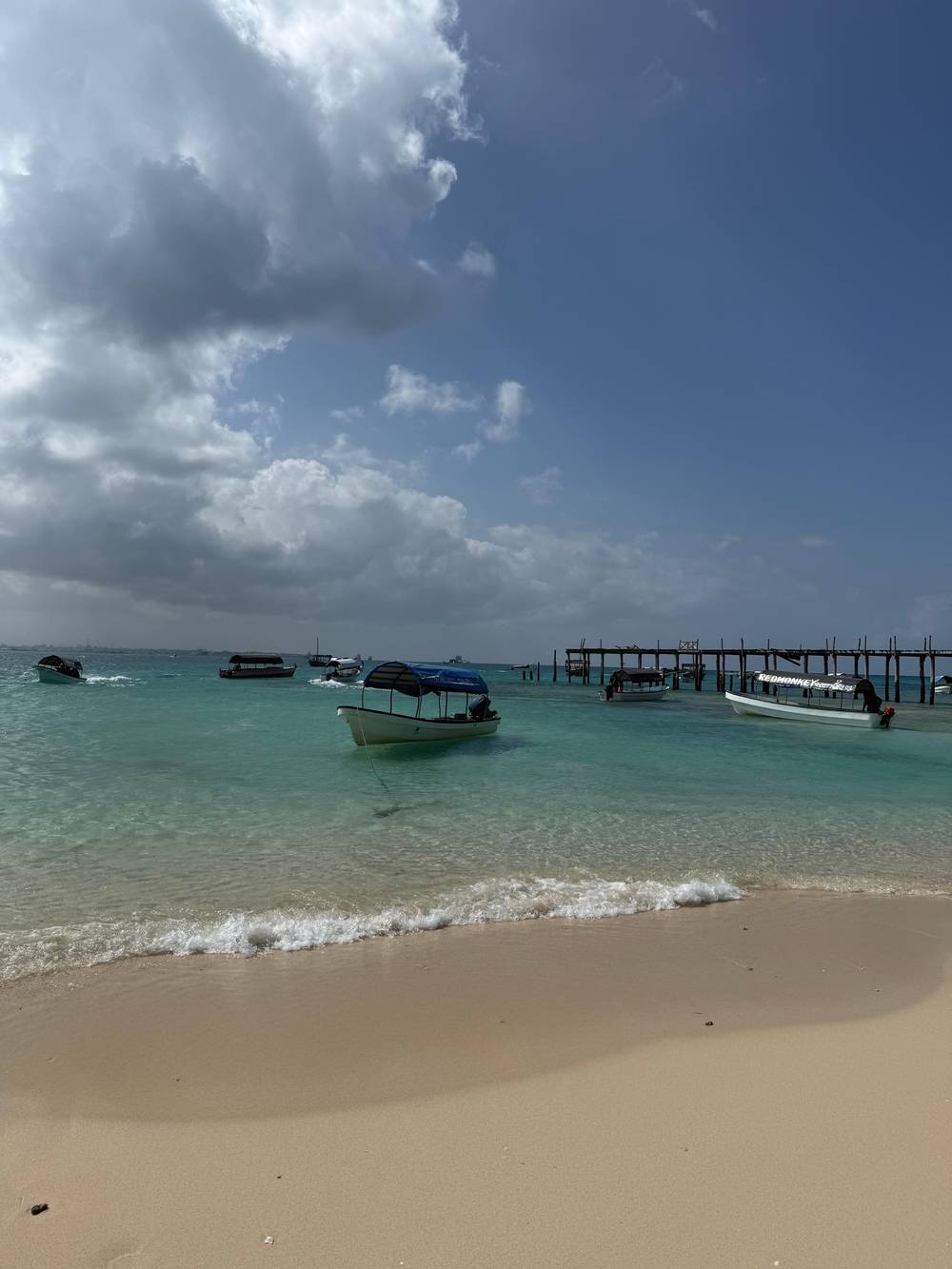
Africa for the Africans Tours on YouTube · The clip loads only after you tap play.
The prison was built to house rebellious slaves, but it was never used for that purpose
With a guide
Today the old prison is a small museum, and a visit to it takes little time but changes how the rest of the island reads. The Commission says the rooms teach the island's story and show objects from the prison and quarantine periods.5 It is a brief stop and fits best before the beach: the stories come first and the swim afterward feels earned. Photography rules vary, so ask at the door.
Beside the museum is the sanctuary that draws the boats, where the Commission places giant tortoises over a century old.6 The tortoises are not part of the prison story; they belong to the island's later life as a visitor destination. A thoughtful visit links the two: the same small island holds a building of confinement and a place of conservation.
If you want the animals and the beach, read the guide to the island and the tortoise page next. If you want the history, ask your guide to start at the museum and to explain the prison before the quarantine station. And if you are weighing tours, look for a listing that gives the island more than a brisk hour, because a history stop needs time for questions.
A history-minded visit starts in Stone Town. Walk the waterfront, find the cathedral and the fort, and notice how close the old harbour is to the island. Then take the boat with a guide who is willing to talk about the building, not only the animals. Some listings are built around the island with a guide for 2 hours, which suits a reader who wants to ask questions.
The headline boat-and-beach day starts from $16, visits the island before a sandbank and lists guides in several languages, Swahili among them. A city-and-spice combination allots the island 1 hour from $42, which suits readers who want Stone Town too. Let the time you want at the museum decide, and whether you also want the city.
Whatever you choose, carry a healthy skepticism about numbers. A prison that never held slaves, a purchase that is dated differently within a single page and a nickname that outlived the building are all reminders that Zanzibar's stories have layers. Enjoy the island as a place with an interesting past, and let your guide tell the story in their own voice while you hold the official lines in mind.
FAQ
The Commission says Changuu was built as a prison in the 1860s and later served as a quarantine station.1
Changuu is the name the Commission uses for the island that visitors call Prison Island.1
The Commission says it was used for yellow fever after World War I.7
Sources
Planning a day to the sandbank and Prison Island? Ask a real person here.